TREEING FEIST ( aka Mountain Feist ) Terrier Group  History
The Treeing Feist was recognized by U.K.C. on November 1, 1998. General Appearance
Characteristics
Head
SKULL - The skull is flat and broad, tapering slightly toward the muzzle. Cheeks are muscular, but not over-developed. MUZZLE - The muzzle is long and sufficiently broad and deep to balance the skull. Lips are tight. Lip pigment matches nose pigment and eye rims. TEETH - The Treeing Feist has a complete set of evenly spaced, white teeth meeting in a scissors bite. NOSE - Nose color is black or self-colored. EYES - Eyes are brown, ranging from dark to amber. Eye rims match nose pigment. EARS - Ears are set at the outside edges of the skull and may be erect or button, but not pendulous. Neck
Forequarters
The forelegs are strong, straight, and moderately well boned. The elbows are set close to the body, but able to move freely in action. The pasterns are short, powerful, slightly sloping, and flexible. "Bench legs" are acceptable but not preferred. Body
Hindquarters
Feet
Tail
Coat
Disqualification: Long or shaggy coat. Color
Disqualification: Albinism. Height and Weight
Gait
Disqualifications
|
Monday, January 16, 2012
Treeing Feist ( aka Mountain Feist )


Wednesday, December 14, 2011
Goodman Hound / Outlaw Cur Cross
We will have a few pups available out of our Goodman running Hound and our Outlaw Cur.
Give us a call if interested.
I have always teased Danny about his hog dogs when asked what breed they are. He called them " Outlaw Cur". His only explanation to that was: Don't know what he has in him but he dang sure can hunt.
Here is an article on the Goodman Hound and I also found this article interesting on the curs:
The history of the Goodman Hound should not be told without mention being made of Ben Robinson. He was born in Montgomery County, Kentucky about three miles north of Mount Sterling in 1805. Robinson was a dealer in horses and mules and made many trips to the eastern States. He became friends with and hunted with the Maryland hunters and their Irish hounds. In about 1850 he brought Tickler and Jake to Kentucky. Many other hounds were brought to Kentucky from around 1850 to 1870. Some of these were Fury, Whitie, Wag (a Virginia hound), Eagle, Old May, Highland and Lady. From Whitie and Fury came Cunningham's Ben.
Willis Goodman, he cannot be given full credit for developing this strain of hounds, but he was the guiding influence. Mr. Goodman was born in Albemarle County, Virginia. As a young man he moved to Paris, Kentucky and took with him some of his hounds of Virginia breeding. He served in the Confederate Army and it was after the war between the States was over that he began his strain of hounds. We will begin with what is said to be the first mating that originated this strain of hounds.
Goodman had a female named Goodman's Lizzie. She was of Maupin breeding. You would probably know this particular bloodline as Walker. Her Maupin blood consisted of the imported English breeding crossed with the great Tennessee Lead. Tennessee Lead was a major contributor the the development of the foxhounds as a whole. Lizzie also carried a trace of Ben Robinson breeding. Cunningham's Ben was straight Ben Robinson breeding. Both his sire and dam came from the Irish hounds of Maryland that traced back to the original importation of Mountain and Muse by Governor Ogle in 1812. Mountain and Muse were the famous pair of hounds that were bred extensively from 1812 until their death and are considered to be the single greatest contributing breeding pair to the development of the foxhound breeds. The Robinson hounds were highly regarded all over the country and their reputation as excellent red foxhounds became mythical. About 1876 Lizzie and Ben were bred. These pups are considered to be the first litter of pups born that would later be called Goodman Hounds.
Goodman should be given credit for supplying and supervising the early outcrosses of this breed. He was able to do this effectively because of his vast knowledge of the various bloodlines. Virginia Bolivar was whelped about 1878. He was bred by Sam Yates of Virginia and given as a present to Goodman by his cousin, William Durrett of North Garden, Virginia. Goodman used Bolivar as a stud dog with good results. Goodman later sent him to New England after he was used extensively as a sire in Kentucky. Scully was purchased by Goodman and Colonel Clay from Colonel William Johnson of Nashville, Tennessee. Scully was used with great success on the females having Bolivar as a sire. Their was much debate among the foxhunters of that day on whether or not Scully was a July hound. Scully shows the Durrett and Cole hounds of Virginia up close in his pedigree. In his third and fourth generation pedigree he shows practically the same blood as does Bolivar. Scully was said by Goodman to be, "A good game hound with plenty of speed and guts which he imparted to his pups". Mollie Trevis may be considered to have been one of the foundation brood matrons. She was owned by Asa Spahr of Winchester, Kentucky. She had several crosses of Maupin's Imperial Rifle and Tennessee Lead in her bloodlines and was definitely a hound that represented Goodman's ideas of proper breeding. She is found quite frequently coming into the pedigrees from crosses on Fidler, a son of Cunningham's Ben out of Goodman's Lizzie.
Mr. Goodman made no claims that his hounds were superior to any others. He was not one to brag on hounds of any breeding. Most of the foxhunters of that day believed that speed was the thing to breed for. Goodman was of the opinion that speed alone was not the important thing. He tried to breed for courage, endurance, speed, a good nose and fox sense. He wanted hounds with good feet and plenty of bone. A necessary factor if they were to pass his test of being able and willing to run five consecutive days and give a good race each day. He believed that no other hunters, with the exception of the Walker brothers, put their hounds through such a severe test as did he and his hunting companions.
The honor of naming this strain of hounds does not belong to Goodman, but rather to Dr. W. E. Wyatt of Cyrene, Missouri. Dr. Wyatt had heard of hounds sent by Goodman and his friends to Captain Bowles and Dr. J. W. Norris of Palmyra, Missouri. He wrote Goodman asking for some of these hounds that were making quite a name for themselves in Missouri and did received them. He later secured permission from Goodman to use his name in a letter intended for the American Field. Goodman had no idea that his name would be used for this purpose and was against commercializing the fame of his hounds.
Historically, the words cur and feist
A Feist is a type of small hunting dog, developed in the rural southern United States.- Description :Feists generally are small , short-coated dogs with long legs, a pointed nose. The ears set high on the head and are button, erect, or short hang ears...
were used in England
England is a country that is part of the United Kingdom. It shares land borders with Scotland to the north and Wales to the west; the Irish Sea is to the north west, the Celtic Sea to the south west and the North Sea to the east, with the English Channel to the south separating it from continental...
to refer to small hunting dogs, where "feists" were the smaller dogs and "curs" were 30 lbs or larger. The Elizabethans may have used the word "cur" to denote "terrier
A terrier is a dog of any one of many breeds or landraces of terrier type, which are typically small, wiry, very active and fearless dogs. Terrier breeds vary greatly in size from just a couple of pounds to over 70 pounds and are usually categorized by size or function...
".
The word cur appears to be colloquial in nature. In 1790, Thomas Bewick wrote:
Cur also appeared in the Scottish periodical, Blackwood's Magazine
in 1819. The article, Species and Historic lineage of Canine derivations, penned by Sir P. Sean Lacey of London (1776–1842), cites "separating the miscreants and cur breeds from those of honorable standing".
An early Webster's Dictionary
Webster's Dictionary is the name given to a common type of English language dictionary in the United States. The name is derived from lexicographer Noah Webster and has become a genericized trademark for this type of dictionary....
definition cites a "worthless dog, or a dog descended from a wolf".
Cur is also a type
of hunting
A hunting dog refers to any dog who assists humans in hunting. There are several types of hunting dogs developed for various tasks. The major categories of hunting dogs include hounds, terriers, cur type dogs, and gun dogs...
and all-purpose dog developed in rural areas of the United States
The United States of America is a federal constitutional republic comprising fifty states and a federal district...
. Cur is used to describe this type of dog, although it does not describe a specific breed. Breeds of cur are usually not recognized by major show registries, so selection for certain looks hasn't been a main factor in their development. They are normally selected mainly for hunting or work ability, although some breeds of cur are also known for herding ability. Consequently, most cur breeds have extremely flexible appearance standards; enough so that a complete breed appearance standard is difficult to create. The resultant diversity in appearance and selection for physical ability result in breeds that tend to be genetically sound and healthy.
They are descended from European dogs brought over by immigrants, possibly mixed with native American dogs. Unlike the true mutt which is random-bred with no human involvement, the curs' breeding is intentionally planned by people.
A related variety of breeds are the feists
A Feist is a type of small hunting dog, developed in the rural southern United States.- Description :Feists generally are small , short-coated dogs with long legs, a pointed nose. The ears set high on the head and are button, erect, or short hang ears...
, small terrier-like dogs bred in the same areas of the United States for hunting small animals and keeping vermin out of farms. The feist breeds are slightly more unified in appearance than the curs, presumably because they were developed solely for working purposes.
Cur breeds include:
Several lesser-known kennel clubs register various cur breeds based on their ancestry (bloodlines), and several lines are recognized within each breed. The National Kennel Club has registered these breeds for decades and is famous for their organized hunting competitions.
Today the United Kennel Club
has an active registration program and competition hunting program for these dogs.
Old Yeller
was a cur, and his intelligence and utility are typical.
Give us a call if interested.
I have always teased Danny about his hog dogs when asked what breed they are. He called them " Outlaw Cur". His only explanation to that was: Don't know what he has in him but he dang sure can hunt.
Here is an article on the Goodman Hound and I also found this article interesting on the curs:
The history of the Goodman Hound should not be told without mention being made of Ben Robinson. He was born in Montgomery County, Kentucky about three miles north of Mount Sterling in 1805. Robinson was a dealer in horses and mules and made many trips to the eastern States. He became friends with and hunted with the Maryland hunters and their Irish hounds. In about 1850 he brought Tickler and Jake to Kentucky. Many other hounds were brought to Kentucky from around 1850 to 1870. Some of these were Fury, Whitie, Wag (a Virginia hound), Eagle, Old May, Highland and Lady. From Whitie and Fury came Cunningham's Ben.
Willis Goodman, he cannot be given full credit for developing this strain of hounds, but he was the guiding influence. Mr. Goodman was born in Albemarle County, Virginia. As a young man he moved to Paris, Kentucky and took with him some of his hounds of Virginia breeding. He served in the Confederate Army and it was after the war between the States was over that he began his strain of hounds. We will begin with what is said to be the first mating that originated this strain of hounds.
Goodman had a female named Goodman's Lizzie. She was of Maupin breeding. You would probably know this particular bloodline as Walker. Her Maupin blood consisted of the imported English breeding crossed with the great Tennessee Lead. Tennessee Lead was a major contributor the the development of the foxhounds as a whole. Lizzie also carried a trace of Ben Robinson breeding. Cunningham's Ben was straight Ben Robinson breeding. Both his sire and dam came from the Irish hounds of Maryland that traced back to the original importation of Mountain and Muse by Governor Ogle in 1812. Mountain and Muse were the famous pair of hounds that were bred extensively from 1812 until their death and are considered to be the single greatest contributing breeding pair to the development of the foxhound breeds. The Robinson hounds were highly regarded all over the country and their reputation as excellent red foxhounds became mythical. About 1876 Lizzie and Ben were bred. These pups are considered to be the first litter of pups born that would later be called Goodman Hounds.
Goodman should be given credit for supplying and supervising the early outcrosses of this breed. He was able to do this effectively because of his vast knowledge of the various bloodlines. Virginia Bolivar was whelped about 1878. He was bred by Sam Yates of Virginia and given as a present to Goodman by his cousin, William Durrett of North Garden, Virginia. Goodman used Bolivar as a stud dog with good results. Goodman later sent him to New England after he was used extensively as a sire in Kentucky. Scully was purchased by Goodman and Colonel Clay from Colonel William Johnson of Nashville, Tennessee. Scully was used with great success on the females having Bolivar as a sire. Their was much debate among the foxhunters of that day on whether or not Scully was a July hound. Scully shows the Durrett and Cole hounds of Virginia up close in his pedigree. In his third and fourth generation pedigree he shows practically the same blood as does Bolivar. Scully was said by Goodman to be, "A good game hound with plenty of speed and guts which he imparted to his pups". Mollie Trevis may be considered to have been one of the foundation brood matrons. She was owned by Asa Spahr of Winchester, Kentucky. She had several crosses of Maupin's Imperial Rifle and Tennessee Lead in her bloodlines and was definitely a hound that represented Goodman's ideas of proper breeding. She is found quite frequently coming into the pedigrees from crosses on Fidler, a son of Cunningham's Ben out of Goodman's Lizzie.
Mr. Goodman made no claims that his hounds were superior to any others. He was not one to brag on hounds of any breeding. Most of the foxhunters of that day believed that speed was the thing to breed for. Goodman was of the opinion that speed alone was not the important thing. He tried to breed for courage, endurance, speed, a good nose and fox sense. He wanted hounds with good feet and plenty of bone. A necessary factor if they were to pass his test of being able and willing to run five consecutive days and give a good race each day. He believed that no other hunters, with the exception of the Walker brothers, put their hounds through such a severe test as did he and his hunting companions.
The honor of naming this strain of hounds does not belong to Goodman, but rather to Dr. W. E. Wyatt of Cyrene, Missouri. Dr. Wyatt had heard of hounds sent by Goodman and his friends to Captain Bowles and Dr. J. W. Norris of Palmyra, Missouri. He wrote Goodman asking for some of these hounds that were making quite a name for themselves in Missouri and did received them. He later secured permission from Goodman to use his name in a letter intended for the American Field. Goodman had no idea that his name would be used for this purpose and was against commercializing the fame of his hounds.
Historically, the words cur and feist
Feist (dog)
were used in England
England
to refer to small hunting dogs, where "feists" were the smaller dogs and "curs" were 30 lbs or larger. The Elizabethans may have used the word "cur" to denote "terrier
Terrier
".
The word cur appears to be colloquial in nature. In 1790, Thomas Bewick wrote:
The Cur Dog is a trusty and useful servant to the farmer and grazier; and, although it is not taken notice of by naturalists as a distinct race, yet it is now so generally used, especially in the North of England, and such great attention is paid in breeding it, that we cannot help considering it as a permanent kind. They are chiefly employed in driving cattle; in which way they are extremely useful. They are larger, stronger, and fiercer than the Shepherd's Dog; and their hair is smoother and shorter. They are mostly black and white colour. Their ears are half-pricked; and many of them are whelped with short tails, which seem as if they had been cut: These are called Self-tailed Dogs. They bite very keenly; and as they always make their attack at the heels, the cattle have no defence against them: In this way they are more than a match for a Bull, which they quickly compel to run. Their sagacity is uncommonly great. They know their master's fields, and are singularly attentive to the cattle that are in them: A good Dog watches, goes his rounds; and, if any strange cattle should happen to appear amongst the herd, although unbidden, he quickly flies at them, and with keen bites obliges them to depart.
Cur also appeared in the Scottish periodical, Blackwood's Magazine
Blackwood's Magazine
Blackwood's Magazine was a British magazine and miscellany printed between 1817 and 1980. It was founded by the publisher William Blackwood and was originally called the Edinburgh Monthly Magazine. The first number appeared in April 1817 under the editorship of Thomas Pringle and James Cleghorn...
in 1819. The article, Species and Historic lineage of Canine derivations, penned by Sir P. Sean Lacey of London (1776–1842), cites "separating the miscreants and cur breeds from those of honorable standing".
An early Webster's Dictionary
Webster's Dictionary
definition cites a "worthless dog, or a dog descended from a wolf".
Curs and cur breeds
Cur is also a type
Dog type
Dog types are broad categories of dogs based on function, with dogs identified primarily by specific function or style of work rather than by lineage or appearance....
of hunting
Hunting dog
and all-purpose dog developed in rural areas of the United States
United States
. Cur is used to describe this type of dog, although it does not describe a specific breed. Breeds of cur are usually not recognized by major show registries, so selection for certain looks hasn't been a main factor in their development. They are normally selected mainly for hunting or work ability, although some breeds of cur are also known for herding ability. Consequently, most cur breeds have extremely flexible appearance standards; enough so that a complete breed appearance standard is difficult to create. The resultant diversity in appearance and selection for physical ability result in breeds that tend to be genetically sound and healthy.
They are descended from European dogs brought over by immigrants, possibly mixed with native American dogs. Unlike the true mutt which is random-bred with no human involvement, the curs' breeding is intentionally planned by people.
A related variety of breeds are the feists
Feist (dog)
, small terrier-like dogs bred in the same areas of the United States for hunting small animals and keeping vermin out of farms. The feist breeds are slightly more unified in appearance than the curs, presumably because they were developed solely for working purposes.
Cur breeds include:
- Blackmouth CurBlackmouth CurThe Blackmouth Cur is "a dog that is multitalented. Primarily BMCs are herding dogs able to hunt big or small game, and still be loving, gentle family dogs willing to protect the home" that has its origins in the Southern United States of America....
- Catahoula Cur
- Mountain CurMountain CurThe Mountain Cur is a type of working dog that are bred specifically for treeing and trailing small game, like squirrel and raccoons. They're also used for hunting and baying big game like bear and wild boar as well as being just an all-purpose farm dog. Curs are a member of the Hound group, and...
- Mountain View CurMountain View CurMountain View Curs is a specific cur founded by Mr. and Mrs. Michael J. Bloodgood, of Bonnieville, Kentucky. It is a type of working dog used for treeing and trailing game; mainly squirrel and raccoon, but also large game. It is a member of the Terrier group.-History:The Mountain View Cur was...
- Stephens CurStephens CurThe Stephens Cur , is a scent hound that belongs to the Cur dog breed. They were originally bred by the Stephens' family in southeastern Kentucky. The dogs known as "little darkies" were bred by generations of that family for over a century. In 1970, they were recognized as separate and distinct...
- Treeing CurTreeing CurThe Treeing Cur is one of the cur dog breeds that originated in the Southern U.S.A. It is used to tree raccoons and opossums.-External links:*...
- Leopard Cur
- Blue LacyBlue LacyThe Blue Lacy or Lacy Dog is a breed of working dog that originated in Texas in the mid-19th century, the only dog breed to have originated in that state. The Lacy was first recognized in 2001 by the Texas Senate. In Senate Resolution No. 436, the 77th Legislature honored the Lacy as "a true Texas...
- Camus Cur
- Canadian Cur
- FeistFeistFeist may refer to:* Feist , a specific class of small hunting dogs, though not a recognized pedigree* Feist Publications, a United States telephone directory publisher acquired by Yellow Book in 2004...
- Florida/Cracker Cur
- Henderson Cur
- Kemmer Stock Cur
- Kemmer Stock Hybrid Squirrel Dog
- Kemmer Feist
- Parnell's Carolina Cur
- Southern Blackmouth Cur
- Tennessee Treeing BrindleTennessee Treeing BrindleThe Tennessee Treeing Brindle is a rare breed of dog that was formerly recognized by the American Rare Breed Association. It is in the American Kennel Club Foundation Stock Service Program in the hound group. It is an American breed, with a brindle color that trees game...
Registry
Several lesser-known kennel clubs register various cur breeds based on their ancestry (bloodlines), and several lines are recognized within each breed. The National Kennel Club has registered these breeds for decades and is famous for their organized hunting competitions.
Today the United Kennel Club
United Kennel Club
The United Kennel Club is the second oldest all-breed registry of purebred dog pedigrees in the United States and the second largest in the world. According to the website, the club records 250,000 registrations annually. The UKC is not part of the International Canine Organisation, Fédération...
has an active registration program and competition hunting program for these dogs.
In popular culture
Old Yeller
Old Yeller (1957 film)
Old Yeller is a 1957 Walt Disney Productions film starring Tommy Kirk, Dorothy McGuire and Beverly Washburn, and directed by Robert Stevenson. It is about a boy and a stray dog in post-Civil War Texas. The story is based upon the 1956 Newbery Honor-winning book Old Yeller by Fred Gipson. Gipson...
was a cur, and his intelligence and utility are typical.
New Orleans Pup at new Home
One of our pups is at her new home in New Orleans with the Bruzeau's.
Here is what they had to say. I am sure happy she is with a family that will love her.
Thank you to the Bruzeau's from the Westbrook's
Hey Danny and Joyce,
Thanks for the pictures, pup is real cute. Can't wait to meet her on
Tuesday when Jay brings her home. Hannah our 7 year old daughter wants to
name her "Patches". Thanks for all your help in getting everything together
so that we could get her, especially the courier service. That really helped
a great deal. Thanks again and may God bless you.
Jay, Karen, Justin, Travis and Hannah
The Bruzeau's
Danny and Joyce,
The puppy is precious, we named her Gody, (like Cody but a G). She has a cute
personality and we already love her.


Here is what they had to say. I am sure happy she is with a family that will love her.
Thank you to the Bruzeau's from the Westbrook's
Hey Danny and Joyce,
Thanks for the pictures, pup is real cute. Can't wait to meet her on
Tuesday when Jay brings her home. Hannah our 7 year old daughter wants to
name her "Patches". Thanks for all your help in getting everything together
so that we could get her, especially the courier service. That really helped
a great deal. Thanks again and may God bless you.
Jay, Karen, Justin, Travis and Hannah
The Bruzeau's
Danny and Joyce,
The puppy is precious, we named her Gody, (like Cody but a G). She has a cute
personality and we already love her.

Monday, November 7, 2011
Weimaraner / bull dog mix pup
This is one of our Weimaraner / bull dog mix pups at her new home. Nicole came to Frankston and got a Mountain Feist pup for her Dad and fell in love with her. And now she is at home with the Tull's. Below is a note from Nicole. Thank you to the Tulls for giving her a wonderful home. She is a beautiful dog.
Hello Danny and Joyce! We have been wanting to send you a pic of our little girl whom we love so dearly and finally got a camera (the other had broken). So here she is! About a week before we came to pick her up, my 7 yr. old daughter had started making a list of potential names for the new puppy. The day we came to Frankston, we had 153 names to choose from....on the way home, we ended choosing one that hadn't even made the list: Brooke. We knew that we remind us of you guys :) Brooke is beautiful, sweet and quiet---we have maybe heard her bark 3 times since we got her back in August. However, when you let her out of her pen, her nose is to the ground sniffing. She digs and roots around often. My husband says she looks like her Mama and I think she looks so much like her Daddy (besides her color). We love her and thanks again for your help with 'dogs' this past year. God Bless, Nicole Tull


Hello Danny and Joyce! We have been wanting to send you a pic of our little girl whom we love so dearly and finally got a camera (the other had broken). So here she is! About a week before we came to pick her up, my 7 yr. old daughter had started making a list of potential names for the new puppy. The day we came to Frankston, we had 153 names to choose from....on the way home, we ended choosing one that hadn't even made the list: Brooke. We knew that we remind us of you guys :) Brooke is beautiful, sweet and quiet---we have maybe heard her bark 3 times since we got her back in August. However, when you let her out of her pen, her nose is to the ground sniffing. She digs and roots around often. My husband says she looks like her Mama and I think she looks so much like her Daddy (besides her color). We love her and thanks again for your help with 'dogs' this past year. God Bless, Nicole Tull


One of our pups - New home in McKinney Texas
This is "Easton". he went to his new home in McKinney Texas. Thank you, Jason for the picture.


Easton at 11 weeks old
 |
| Easton at 8 weeks old |
Easton at 8 weeks old
Friday, October 21, 2011
Catahoula Bulldog
We have pups that are a cross between an America Bulldog and a Louisiana Catahoula. Read article below about the origins of this mixed breed. This is the Dam and Sire of the pups.


Catahoula Bulldog
CATAHOULA BULLDOG
By Al Walker, ARF Genealogist &
Registrar
FOR THOSE WHO SEE AND FALL IN LOVE WITH
A "CATAHOULA BULLDOG": These same individuals often will want to know, "What
constitutes a "Catahoula Bulldog"? In short, a Catahoula Bulldog is a cross of
two high quality breeds – one being an ARF Registered Catahoula [Order Tom D. Stodghill’s book: "History Of Catahoula Leopard Cowdogs", $20.00, post
paid.], and the other being an ARF Registered
American Bulldog [Order Dave Putnam’s book: "The Working American Bulldog", $55.95, post paid.].
In 1968, ARF welcomed Mr. Bart Perry,
of Midlothian, Texas, as the first ARF Certified Breeder of "CATAHOULA
BULLDOGS". Six years prior, Bart had been active in the raising of "American
Bulldogs", and had decided to expand into the "Catahoula" line.
The ‘Catahoula Bulldog" was bred for
two reasons. First, ranchers and hog-hunters have used "Catahoulas" for many
years to herd cattle and hunt hogs, but, to catch hogs, they had to carry a
"catch-dog" with them. It seemed that most "Catahoulas" were neither big enough,
nor tough enough, to catch. The "American Bulldog" has an impeccable reputation
as a catch-dog. Therefore, when the "American Bulldog" is crossed with a
"Catahoula", you get a bigger, tougher dog which will work cattle and also catch
hogs when needed. The second reason is that the "Catahoula Bulldog" is an
excellent bear dog because it has the size and aggressiveness of the "American
Bulldog", and the intelligence and hunting ability of the
"Catahoula".

Did you ever hear that proverbial
expression, "Always get acquainted with your dog"? Spend the first week of the
dog’s education by just feeding, petting, and walking with him. You need to get
acquainted with him as much as he needs to get acquainted with you. Most animals
are part of a "pack order" psychological system. In the wolf family, order is
enforced by the pack leader, and he usually is the strongest and fiercest male
who has the ability to subdue any rival in battle, whether a wild dog pack, wild
hogs, deer herds, etc. This strong instinct to be a leader, and, also, an
equally strong instinct for submissive behavior is what a trainer exploits, to
the best of his ability, in his dog. Keep in mind, even well-trained dogs can
revert to their wild nature, and this is why it is an unwritten law of the range
never to let your dog roam. If you do, never complain if he gets
shot.
The "Catahoula Bulldog" is a rugged
canine, full of life and independence. He will sacrifice all for his ability to
work the ranging lands where herds and wild animals roam. His instincts are
razor sharp, and his intelligence makes him a top working dog, and one of the
best personal protection dogs one could want.
The "Catahoula Bulldog" is recognized
as a 50-50 first generation cross between the ‘Catahoula" and the "American
Bulldog", and up to a 75-25 cross in succeeding generations. It is desirable to
keep the cross within the 75-25 limit in order not to lose the basic
characteristics of these two fine breeds.
Wednesday, October 19, 2011
Updated pictures of pups available now
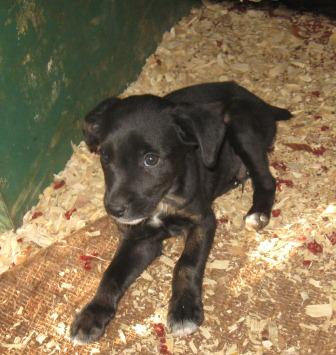
Updated pictures of pups available:
Dam: Red Girl Sire: Amos


Pups are 6-8 weeks old and has had their first shot. They are available now. You can see pedigree on our website on the " Our Mountain Feist" tab. Check back often for updates. if interested give us a call or shoot us a note. Deposits can now be made via our PayPal.
Dam: Red Girl Sire: Amos

  |
| Both Males Dam Red Girl Sire Amos |
 |
| Female Dam: Betty Sire: Amos |
Friday, September 23, 2011


Thursday, September 22, 2011


Subscribe to:
Comments (Atom)